The job changes at scale
In 2023 I moved to the corporate side of Wheel Pros as Vice President of Performance Marketing, responsible for paid advertising, social, email, and affiliate across the company's portfolio of more than sixty aftermarket brands. I arrived the way most operators would, thinking of it as a bigger version of the marketing I had run my whole career, first for the brands I founded, then for the Driven Lighting Group portfolio.
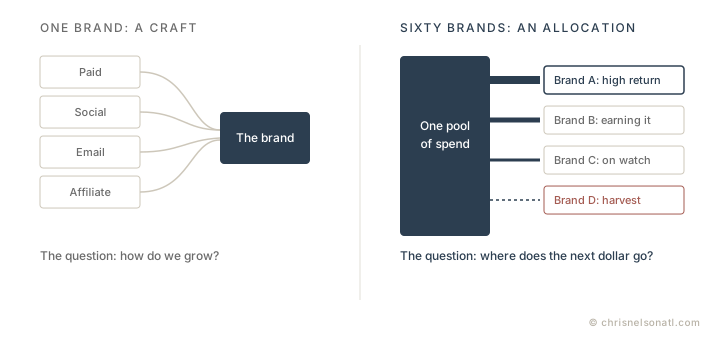
It is not a bigger version. Somewhere between one brand and sixty, performance marketing stops being a marketing job. The craft still matters, the creative still matters, the channel expertise still matters. But none of those are the job anymore. The job is deciding where finite money, finite specialists, and finite attention go, across dozens of brands that all believe they deserve more of each. That is capital allocation, and most marketing leaders were never trained to do it.
The budget is the strategy
At a single brand, the strategy question is how to grow. At a portfolio, the strategy question is where to grow, and the honest answer is written in the budget, not the deck. You can present any strategy you want, but the allocation IS the strategy. Whatever the spreadsheet funds is what the company actually believes.
That reframing changes daily behavior. Every dollar of spend has an alternative use at another brand, so every decision is an investment decision: where does the next dollar produce the most durable revenue? A campaign that would be an obvious yes inside one brand can be an obvious no at the portfolio level, because the same money working at a sister brand returns more. Single-brand marketers almost never think this way, because they have never had to. Portfolio operators think this way or they underperform, silently and permanently.
The discipline this demands is the same one I wrote about in the first essay in this series: treat the portfolio as a living thing, concede what the numbers tell you, and redeploy without sentiment. Marketing dollars are just where that discipline gets tested most often, because the requests never stop.
One number that makes sixty brands comparable
The immediate practical problem at portfolio scale is that nothing is comparable. One brand lives on paid search, another on social video, another on email and affiliates. Category economics differ, price points differ, purchase cycles differ. Line up their channel dashboards side by side and you learn almost nothing about who is spending well.
That is why the number I anchor on is APOR, Advertising Percent of Revenue: total advertising spend as a share of the revenue it supports. If you know MER, Marketing Efficiency Ratio, you already have the concept, and APOR will click instantly. The difference is scope. MER sweeps broad marketing cost into one ratio. APOR is a sniper rifle: ad spend only, measured against revenue, which makes it the cleanest possible read on whether the paid engine is earning its keep.
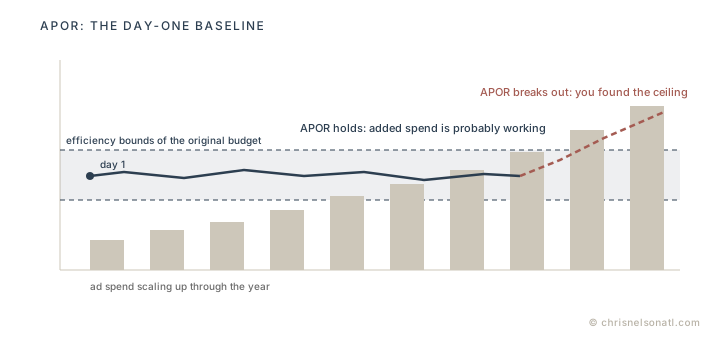
The reason it works as an operating tool and not just a report is the baseline. Set the annual budget and revenue target and you have your APOR on day one. From that moment, everything is tracked against the plan you committed to. Spend more, cut spend, shift the mix: at any point in the year you know whether you are still inside the efficiency bounds of the original targets, because the ratio tells you instantly.
That baseline is also how owners learn to trust the numbers. The hardest recurring conversation in marketing is the request for more budget, because most owners have no independent way to judge it. APOR gives them one. If spend goes up and APOR holds against the original plan, the added dollars are probably working. If APOR starts degrading, you have found the ceiling, and you found it in the ratio before you found it in the P&L.
Across a portfolio, the same ratio does double duty. It makes a mature brand and a growth brand comparable on effort, as long as you read it against where each brand sits in its life cycle, since a launch-phase brand should run hot and a mature brand should not. And it surfaces drift early, because a creeping APOR with flat revenue is the quietest possible signal that a marketing engine is degrading.
Peanut butter is not a strategy
Here is the most common failure I see in portfolio marketing, and it is organizational, not analytical: every brand gets a budget because every brand has a manager who asks for one.
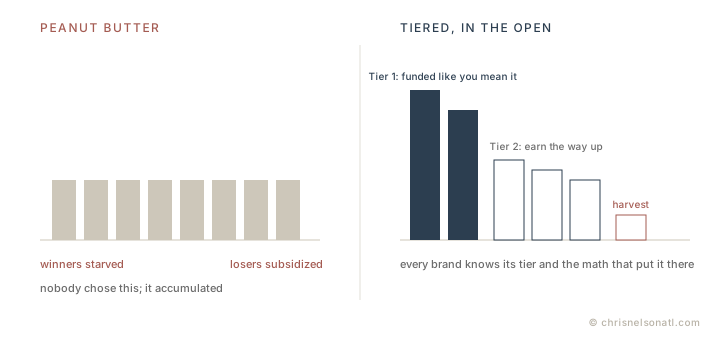
Spread the spend like peanut butter and you get the worst of both worlds. Your winners are starved, because the money that would compound fastest is parked elsewhere for fairness. Your losers are subsidized, because defunding a brand means a hard conversation with a person, and the org would rather leak money than have it. Nobody decided this as a strategy. It accumulates, budget cycle after budget cycle, until the allocation no longer resembles anything anyone would choose on purpose.
The fix is tiering, done in the open. Rank brands by margin, momentum, and headroom. Fund the top tier like you mean it. Hold the middle accountable for earning their way up. And for the bottom, either give a brand a specific, dated turnaround thesis or start harvesting it, spending down to the level its economics justify. Every brand knows its tier and knows the math that put it there. The transparency is the point: tiering only gets sabotaged when it is done in the dark.
This is the marketing version of the consolidation discipline that built the portfolio in the first place. Brands age, die, and get born. Budgets have to do the same.
The platform scoreboard is not the P&L
The second failure mode is subtler and more expensive: running the portfolio on the numbers the ad platforms report about themselves.
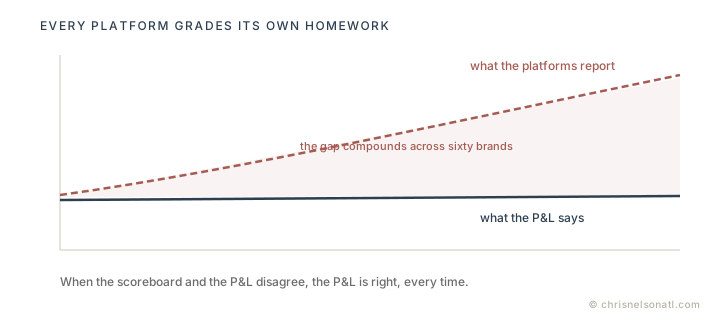
Every platform grades its own homework. Attribution models claim credit generously, overlapping channels claim the same order twice, and a team optimizing platform-reported return can look brilliant while contribution stalls. At one brand, the gap between the scoreboard and the truth is an annoyance. Across sixty brands, it compounds into real money, because allocation decisions built on flattering numbers systematically shift spend toward whatever exaggerates best.
The defense is to make the P&L the referee. Read platform metrics as diagnostics inside a channel, never as verdicts across channels. Judge brands on revenue, contribution, units, and APOR trend. And pressure-test the scoreboard the blunt way: vary spend and watch what actually happens to revenue, because incrementality shows up in the business math or it does not exist. When a channel's reported performance and the P&L disagree, the P&L is right, every time, and the sooner a team internalizes that, the sooner the portfolio's allocation starts telling the truth.
The allocator's lens travels
Step back far enough and the portfolio marketing job looks nothing like its title. It is closer to running a fund: position sizing across brands, one comparable measure of efficiency, rebalancing on evidence, and a standing fight against the two most human forces in any budget, fairness and flattery.
That is also why the lens matters beyond marketing. An operator who can allocate spend honestly across sixty brands is doing, at department scale, the same job an investor does across a portfolio of companies. The math is the same. The discipline is the same. Only the unit size changes.